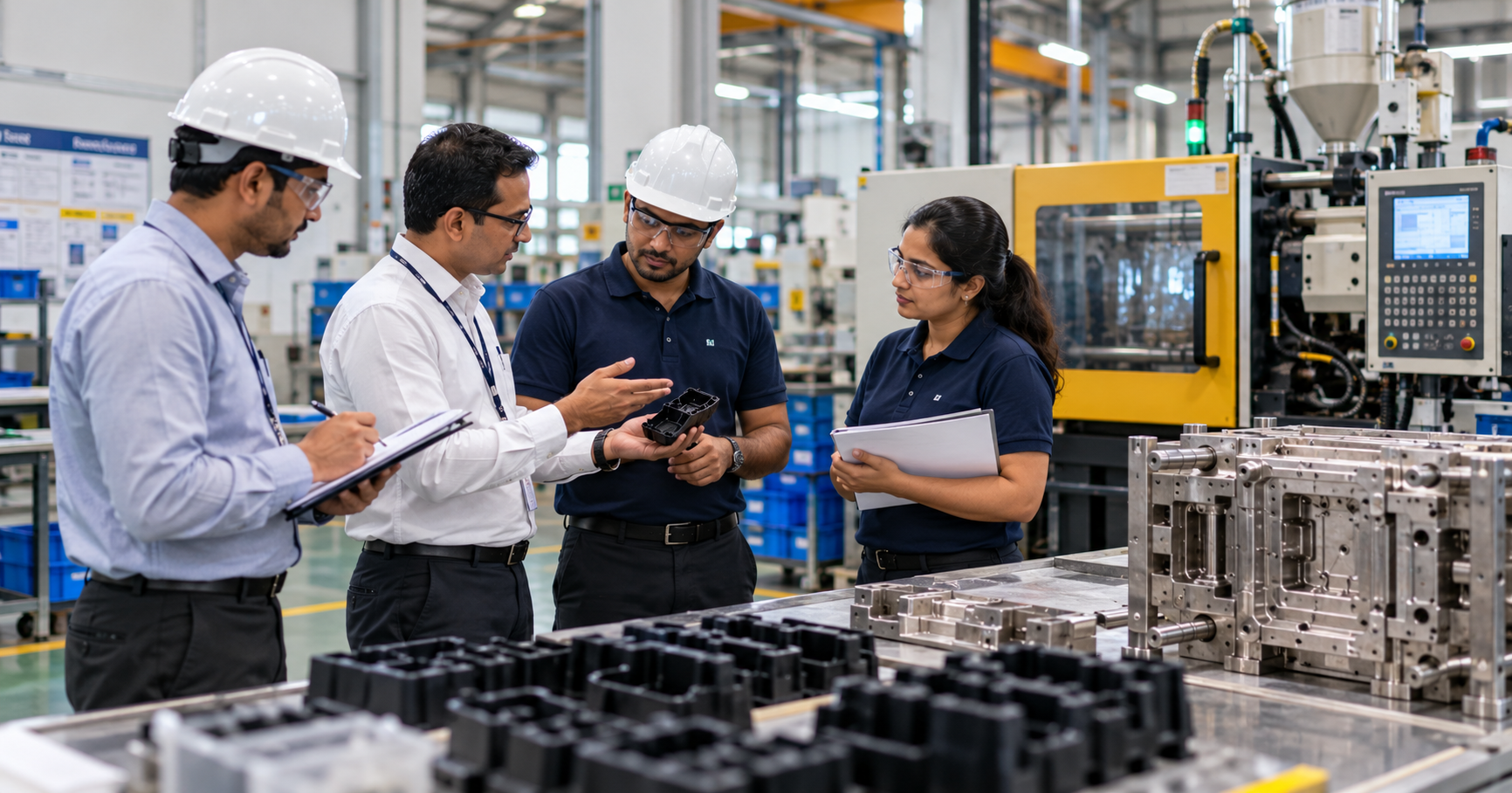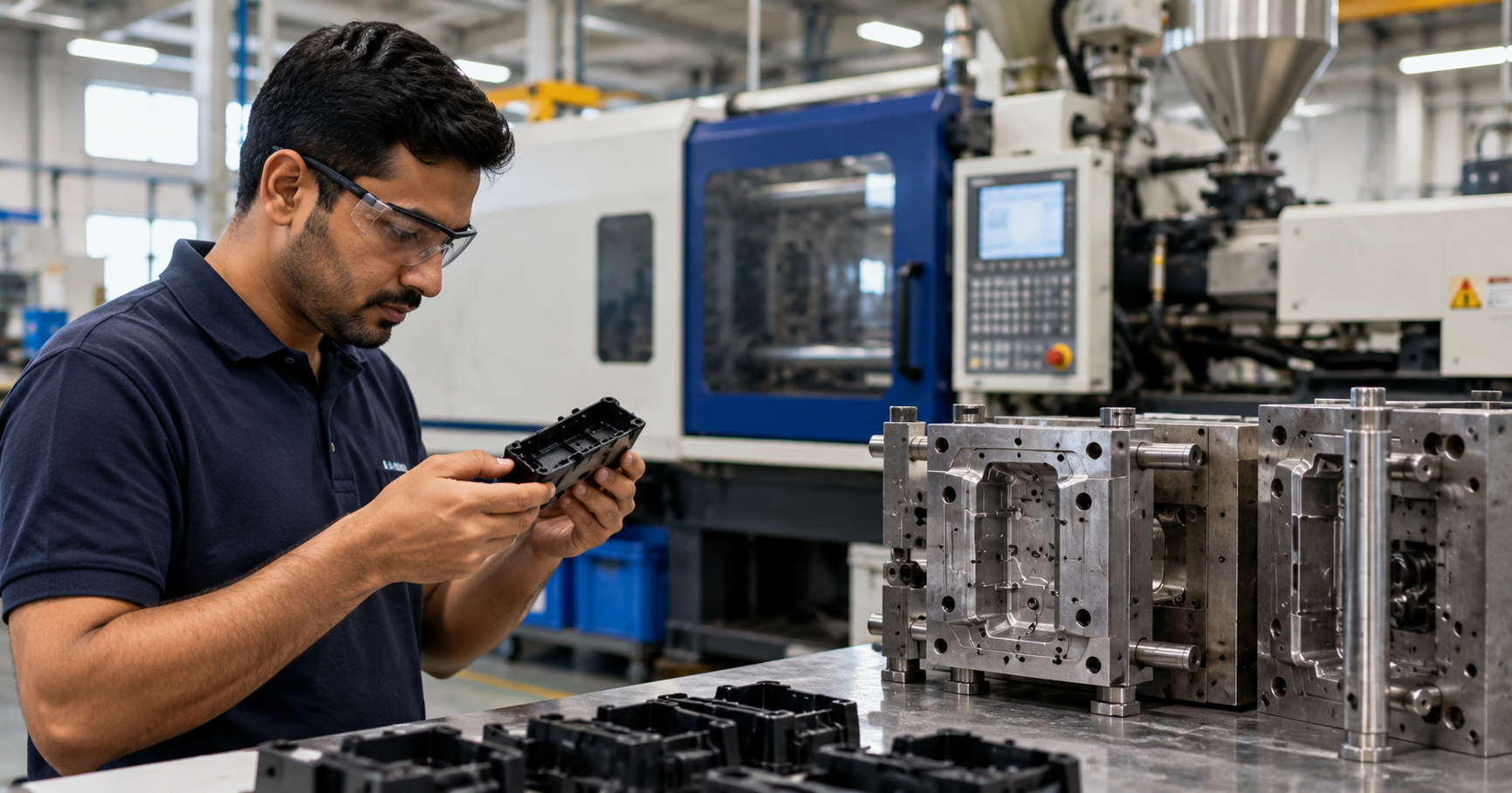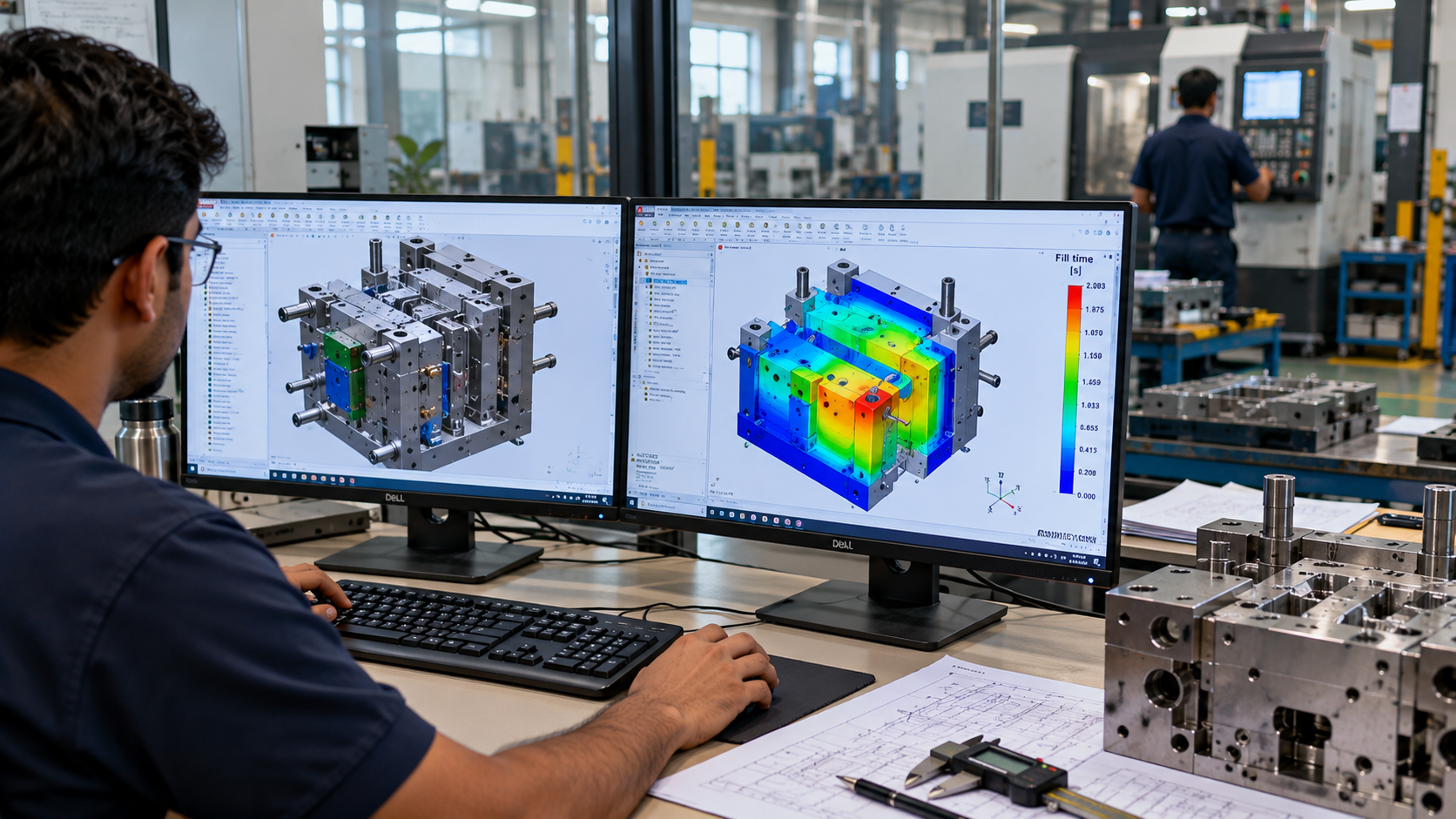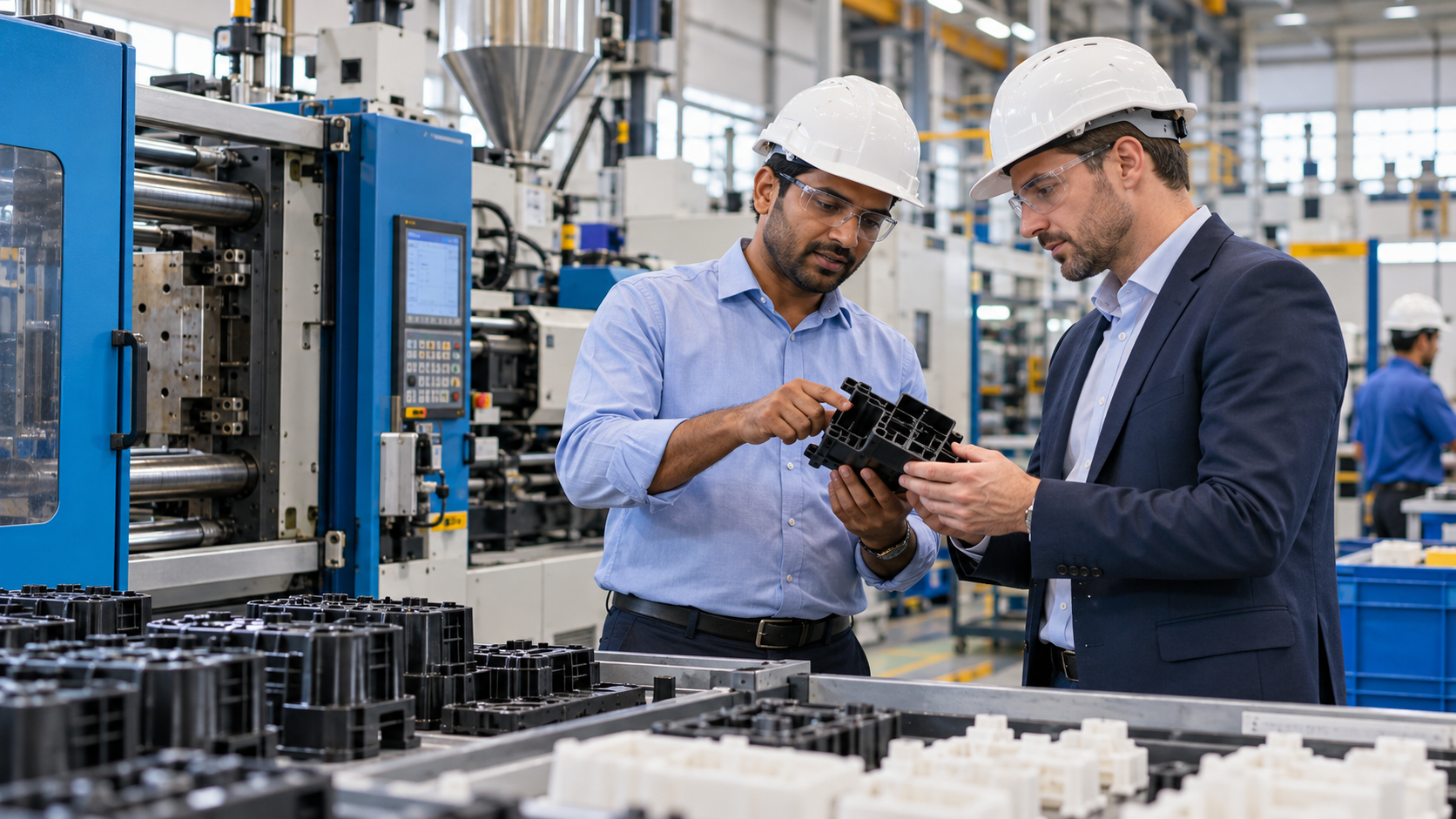
If you had asked a global sourcing manager a decade ago where to send a mid-volume injection molding program, the default answer was China. Today that answer is far less automatic. India has built out a genuinely competitive injection molding ecosystem, driven by a large domestic auto and consumer base, a rapidly growing electronics manufacturing push, and a generation of molders who have invested in machines, people, and process discipline.
The country is still underrated. The addressable Indian market for injection molding applications is in the hundreds of millions of dollars, and the growth curve is one of the steepest in the world, as the recent expansion by Molding Solutions in Pune illustrates. Industry analysis from sourcing platforms like Zetwerk suggests that for a broad category of industrial and automotive parts, Indian molders are 20 to 35 percent cheaper on landed cost than Chinese alternatives, with roughly comparable quality.
So what does a global buyer need to actually know before placing a program here? That is what this article is about.
The Indian injection molding ecosystem at a glance
Capacity is clustered. Most serious capability sits in a handful of regions:
- Pune and the Pimpri-Chinchwad belt for automotive, where decades of OEM presence have created a dense Tier 1 and Tier 2 supply base.
- Chennai for automotive and increasingly for consumer electronics, driven by Hyundai, Ford, and the Tata-led electronics expansion.
- NCR, Noida, and Greater Noida for consumer electronics, white goods, and precision molding, catering to brands like Samsung and the Foxconn-Apple ecosystem.
- Ahmedabad and the Gujarat belt for packaging, machinery, and industrial molding.
- Bengaluru for medical devices, aerospace, and increasingly for electric mobility components.
Knowing where your category clusters helps you shortlist faster. A medical device program is best served around Bengaluru or Pune; a white-goods enclosure program is better served near the brand's own assembly cluster in NCR or Chennai.
Where India genuinely wins on cost
India is not a universal low-cost answer. It is a very good answer in specific categories.
Indian molders are typically more competitive than Chinese molders for:
- Low to medium cavity tools, roughly one to four cavities, where tooling cost does not dominate
- Engineering plastics running on mid-tonnage presses
- Labour-intensive assemblies such as insert molding, overmolding, and sub-assemblies where human handling is involved
- Automotive parts where IATF 16949 discipline is already baked into the supply base
India is usually not the right choice for very-high-cavity consumer packaging where Chinese molders have scale advantages, or for programs where tooling cost is the single biggest line item and must be minimized at all costs. Indian tooling is typically 20 to 35 percent more expensive than Chinese tooling of similar quality.
The net picture, honestly: unit cost in India is usually meaningfully lower, but tooling cost is a bit higher. For programs that will run for three or more years, India wins on total cost. For programs that will run for a single season, the maths is tighter.
Quality standards and certifications you can expect
Serious Indian molders operate against the same quality frameworks their global peers do. Expect to see:
- ISO 9001 as a baseline across almost every reputable supplier
- IATF 16949 for automotive, with customer-specific requirements such as VDA 6.3 for VW-group programs or AIAG PPAP for North American OEMs
- ISO 13485 for medical device programs, often with cleanroom molding in Class 8 or Class 7 environments
- ISO 14001 and increasingly ISO 45001 for environmental and worker-safety management
Reference frameworks like the IATF Global Oversight site and the AIAG publications are routine reading for Indian automotive molders, which gives global buyers a shared vocabulary from day one.
Communication, time zones, and project cadence
One of the practical reasons Indian molders are easy to work with for buyers in Europe and North America is the time zone and the language. India overlaps the European morning and the US evening, which means a working day in India can both close yesterday's US questions and open today's European ones.
English is the default working language in engineering and management. Email, Teams, Zoom, WhatsApp, and increasingly Slack are standard. CAD exchange in STEP and native formats is routine. If anything, buyers often find Indian suppliers more responsive than they expect, partly because the business culture rewards it.
Set the cadence early. A good program runs with:
- A named program manager on each side
- A weekly thirty-minute status call during tooling and sampling
- A shared tracker for open issues, decisions, and milestones
- Clear escalation lines when something slips
None of this is unique to India. All of it is more important when teams sit in different countries.
Logistics, duties, and total landed cost
Buying from India means thinking in landed cost, not FOB. Factors that affect total cost:
- Sea freight from Nhava Sheva, Mundra, or Chennai to major global ports is relatively well-established and competitive
- Air freight is cost-effective for samples and small production runs, with multiple daily flights from major Indian metros
- Many categories of plastic parts enjoy favourable duty treatment in regions with India trade agreements, including UAE, Australia, and increasingly the UK
- GST input credit mechanics affect exporter pricing; most reputable molders are set up to export under LUT with zero-rated supply
Resources like India Trade Portal and CBIC are useful references for duty structures and the current state of trade agreements.
Mold ownership, IP protection, and contract hygiene
Indian contract law gives you strong rights, provided your contract actually says what you mean. For a molding program, make sure the written agreement is explicit on:
- Mold ownership and storage, with the right to physically retrieve the tool
- Shot count tracking and mold life assumptions
- Confidentiality and non-use of CAD, process parameters, and proprietary materials
- Quality acceptance criteria, inspection responsibilities, and defect liability
- Governing law and dispute resolution forum
Many global buyers prefer arbitration under the Singapore International Arbitration Centre or the London Court of International Arbitration. Indian molders of any scale are familiar with these clauses and will not push back on reasonable language.
What to visit, and what to verify remotely
A one-week visit to India can cover a lot of ground. A typical program qualification trip looks like:
- Day 1 to 2: Shortlisted molder visits with on-site audits, usually two per day
- Day 3: Toolmaker visits, especially if tool and press are at different suppliers
- Day 4: Resin distributor and secondary process suppliers if relevant
- Day 5: Debrief, scoring, and preferred-supplier selection
Between visits, remote verification can cover quality system documentation, financial checks, reference calls, and sample part reviews. Several buyers now use third-party inspection firms like SGS, Bureau Veritas, or TUV for standardized factory audits before committing to a program.
Where India is still weaker, honestly
We will not pretend the picture is perfect. Fair criticisms you should factor in:
- High-end precision tooling for very tight tolerances is still often outsourced to Japan, Korea, or Portugal
- Local resin availability is improving but some specialty grades still have long lead times from imports
- Logistics within India can be inconsistent, so inland movement to the port is worth planning carefully
- The gap between the best Indian molders and the average is wider than in more mature markets, which makes supplier selection more important here, not less
None of these are deal-breakers, but they are reasons to pick your partner carefully rather than placing a program with the first supplier who answers an RFQ.
How FD Group works with global buyers
At FD Group we have structured our export program around what global buyers actually need. English-first communication, time zone-aware scheduling, documentation in buyer-standard formats, support for standard PPAP and APQP processes, and transparent reporting through the program. If you are considering India as a sourcing option and want a conversation rather than a sales pitch, talk to us. We are happy to walk you through specific case studies in your category, and even happier to introduce you to current customers in your region who can give you an unfiltered reference.
India is not a magic answer, but for a large and growing share of injection molding programs, it is now the best answer available. The buyers who treat it that way are the ones quietly winning on cost and resilience right now.