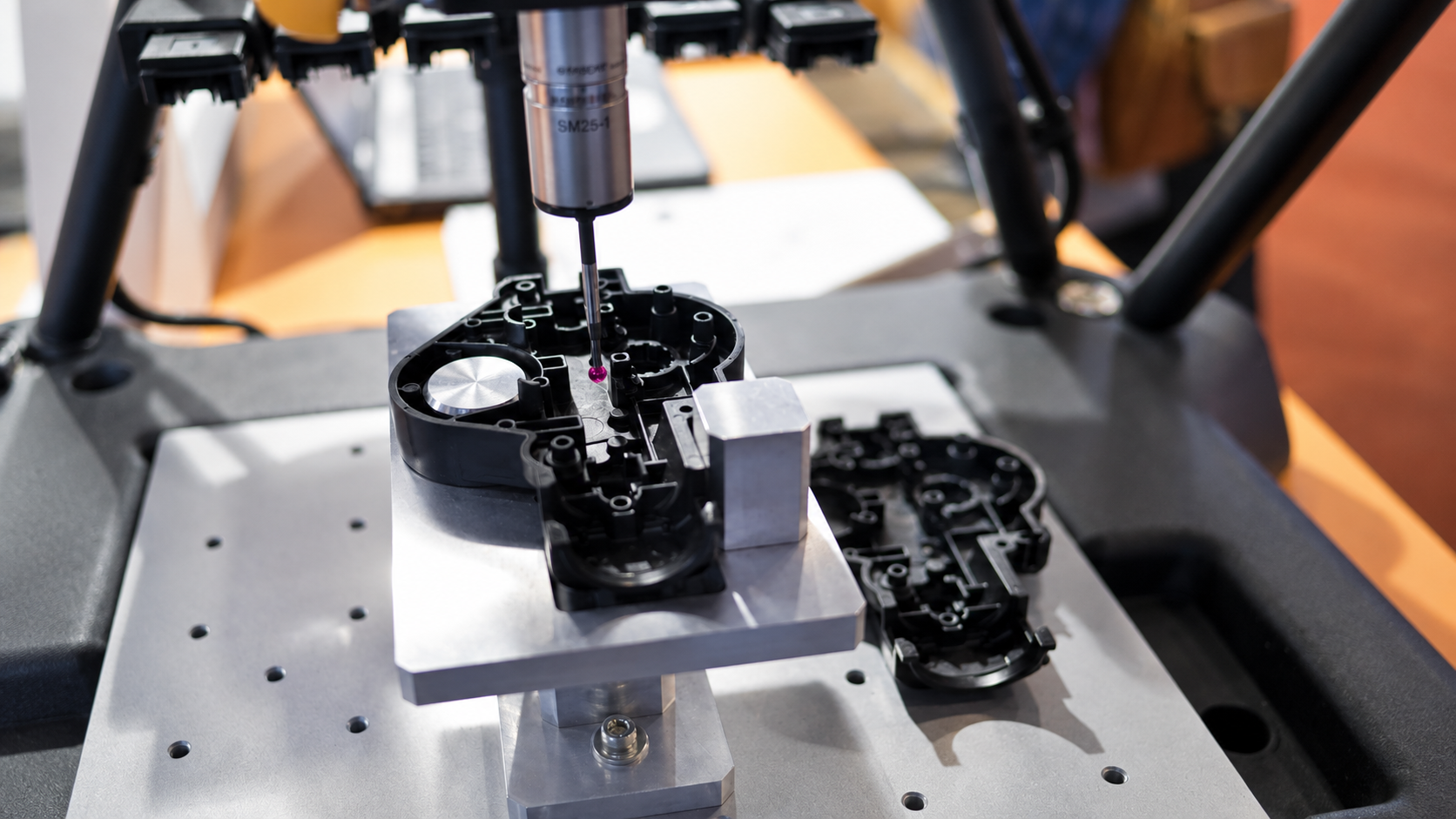
Ask a machinist for a 0.01 millimeter tolerance on a metal bracket and it is routine. Ask for the same on a molded plastic part and the conversation changes, because plastic behaves differently. A molded part shrinks as it cools, and that shrinkage varies with the resin, the wall thickness, and the process. Understanding tolerances in plastic injection molding helps designers specify parts that are both functional and manufacturable, and helps procurement teams avoid paying for precision the application does not need. This article explains what drives achievable tolerances, the standards that define them, and how tolerance decisions affect cost.
Why Molded Plastic Tolerances Are Different
The central reason is shrinkage. Molten polymer is injected into a cavity, then cools and contracts. Molders account for this by cutting the steel slightly larger than the final part, but shrinkage is never perfectly uniform. Thicker sections cool more slowly than thin ones, flow direction can influence how a material contracts, and small process changes can shift the result. That is why a realistic plastic tolerance is generally looser than what machining a solid billet can achieve, and why a good molder talks about tolerances in the context of the specific resin and geometry.
What Drives Achievable Tolerances
Several factors combine to determine how tight a molded dimension can realistically be held.
- Material shrinkage: Amorphous resins such as ABS and polycarbonate shrink less and more predictably, often in the range of roughly 0.3 to 0.8 percent. Semi-crystalline resins such as polypropylene, nylon, and acetal shrink more, commonly from about 1 to 3 percent or higher, and can be more direction-sensitive. These are typical ranges that vary by grade and process.
- Wall thickness and uniformity: Uneven walls cool at different rates, which increases the chance of warpage and dimensional variation.
- Part geometry and gate location: Long flow paths, ribs, and bosses all influence how a part fills and shrinks.
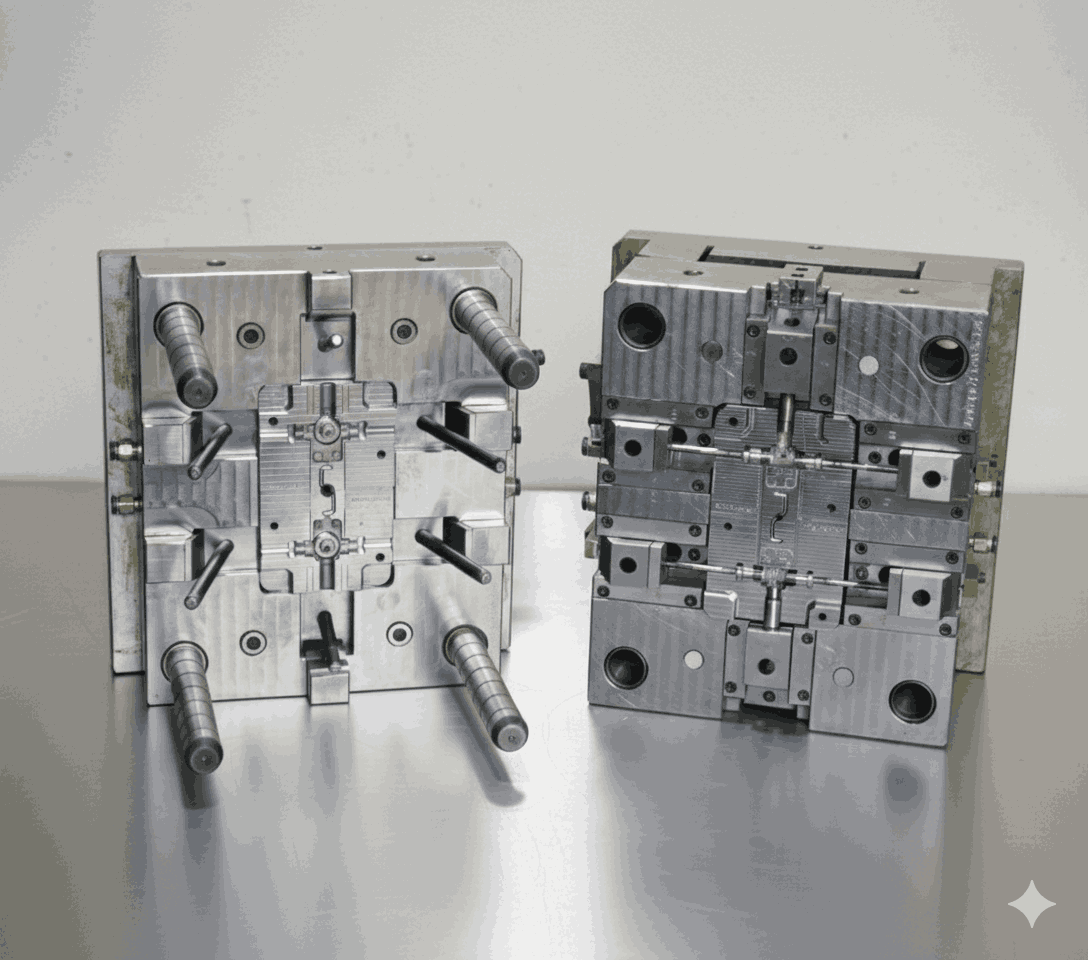
- Mold-fixed versus non-mold-fixed dimensions: Features formed entirely within one piece of steel can be held tighter than dimensions that cross the parting line or depend on moving cores and slides, which carry additional mechanical variation.
Warpage is worth calling out separately, because it is a dimensional problem that a tolerance callout alone cannot fix. Uneven cooling and residual stress can cause a part to bow or twist after it leaves the mold, which shifts multiple dimensions at once. It also affects how parts are measured: a molded part continues to stabilize for a period after ejection, so critical dimensions should be checked under agreed conditions once the part has reached a stable state, not straight off the press. Defining when and how a dimension is measured is as important as the tolerance itself.
The Standards That Define Them
Rather than negotiating every dimension from scratch, the industry uses published tolerance systems.
- ISO 20457 is the current international standard for tolerances and acceptance conditions on plastic molded parts.
- DIN 16742 is a widely referenced German standard that assigns tolerance groups a designer can call out on the drawing.
- The Plastics Industry Association (formerly SPI) publishes commercial and fine tolerance guidance long used across North America, though it is best treated as a recommended-practice guideline rather than a strict metrological specification.
These systems typically define grades or groups, so a designer can specify, for example, a general grade for most features and a finer grade only where function demands it. That selective approach is central to controlling cost.
Typical Tolerance Ranges
Actual capability always depends on the resin, geometry, and tooling, but as a rough guide, general or commercial tolerances often land near a fraction of a percent of the nominal dimension, while fine or precision tolerances push tighter on small, low-shrink features. Very tight bands, on the order of a few hundredths of a millimeter, are achievable on small features in dimensionally stable resins with well-built tooling and a controlled process, but they should be specified deliberately rather than by default. Treat any published table as a starting point for discussion, not a guarantee.
Why Tighter Tolerances Cost More
A tighter tolerance is not just a number on a print. It cascades through the whole program:
- Tooling must be built and finished to a higher precision, which adds cost and lead time.
- The process window narrows, so the process needs more development and monitoring to stay in range.
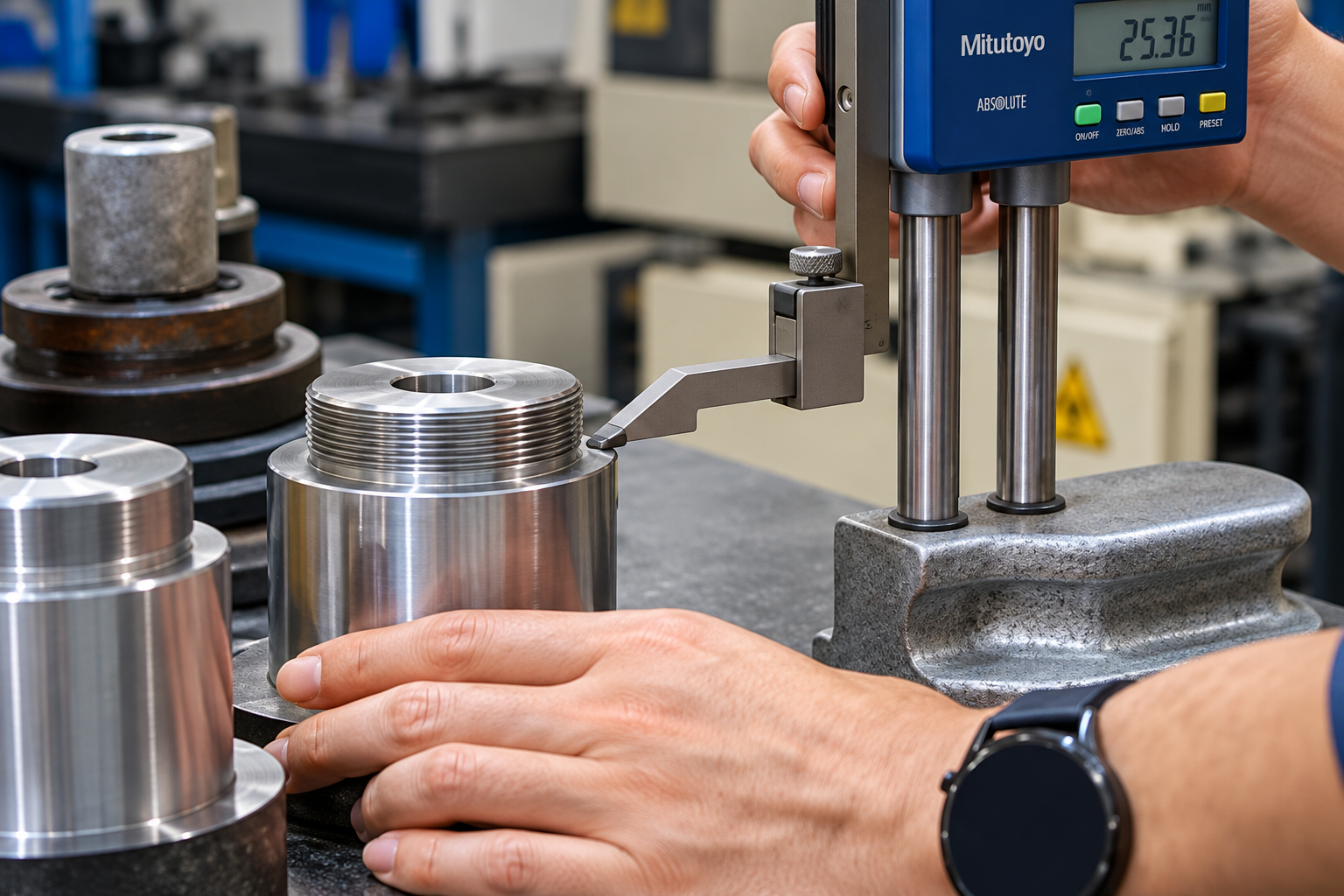
- Inspection becomes more involved, often requiring CMM or vision measurement rather than hand gauges.
- Scrap risk rises, because a smaller window leaves less margin for normal variation.
The practical takeaway is to reserve tight tolerances for the features that actually control fit, function, or sealing, and to allow general tolerances elsewhere. Our [Internal Link: Manufacturing Capabilities] page outlines how we approach tooling and process development for tolerance-sensitive parts.
Designing for the Right Tolerance
The best time to manage tolerances is during design. Uniform wall thickness, generous radii, thoughtful gate placement, and clear identification of truly critical dimensions all make a part easier to hold to spec. Reviewing tolerances with your molder early, ideally alongside the resin selection, prevents expensive changes after the tool is cut. To talk through a specific part, get in touch via our [Internal Link: Contact Our Engineering Team] page.
Frequently Asked Questions
What is a typical injection molding tolerance?
It varies widely, but general or commercial tolerances often fall near a fraction of a percent of the dimension. The realistic value depends on the resin, wall thickness, geometry, and tooling, so it should be confirmed for each part.
Why are molding tolerances looser than machining?
Because molded plastic shrinks as it cools, and shrinkage is not perfectly uniform. Machining removes material from a stable solid, so it avoids the cooling and shrinkage variation inherent to molding.
What are DIN 16742 and ISO 20457?
They are published standards that define tolerance groups or grades for plastic molded parts, giving designers a consistent way to specify achievable tolerances on a drawing.
Why do tighter tolerances cost more?
Tighter tolerances demand more precise tooling, a narrower and more closely monitored process, more detailed inspection, and carry a higher scrap risk, all of which add cost and lead time.
Which resins hold the tightest tolerances?
Generally, amorphous resins such as ABS and polycarbonate, because they shrink less and more predictably than most semi-crystalline resins. Final capability still depends on part design and process control.