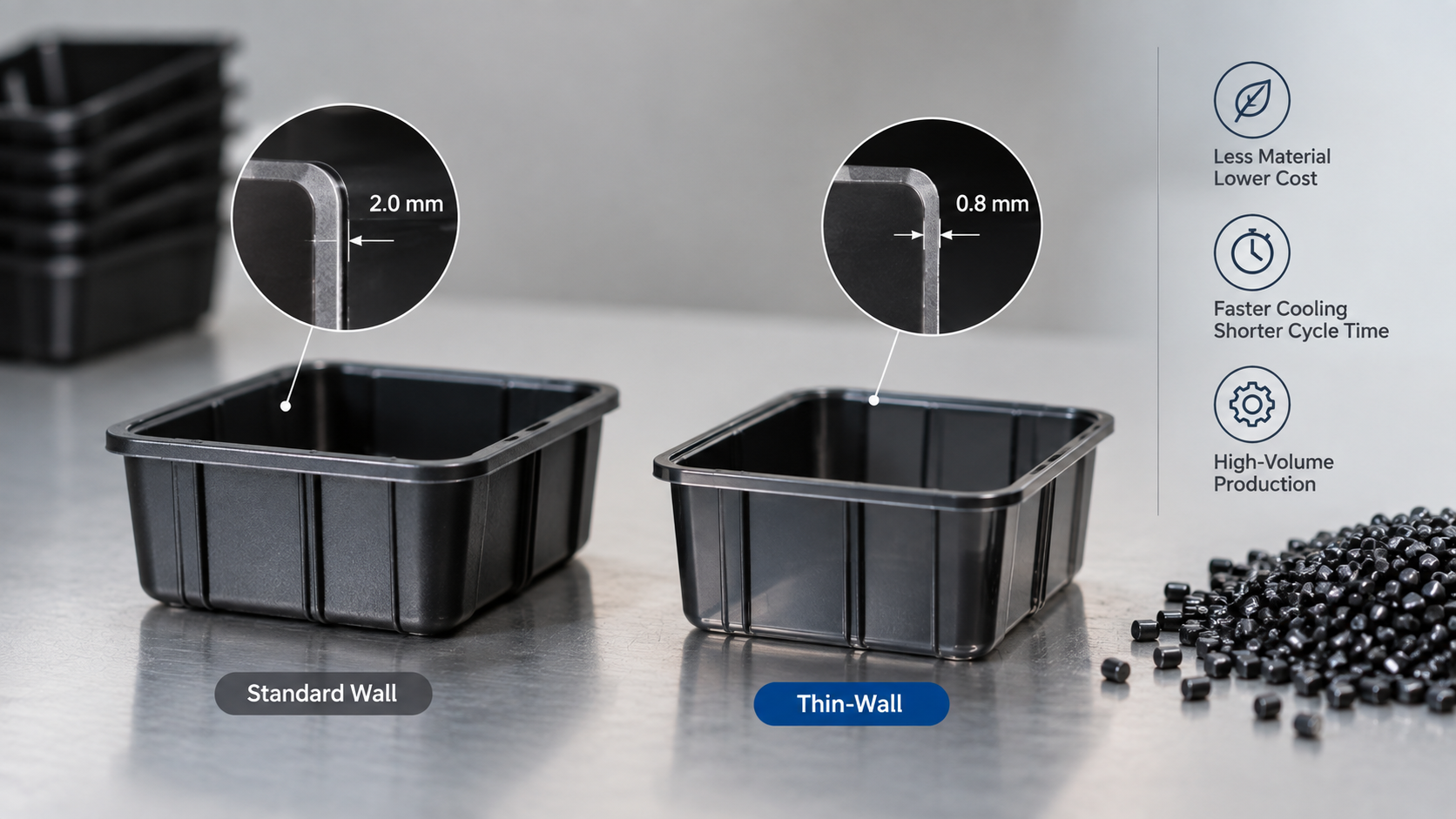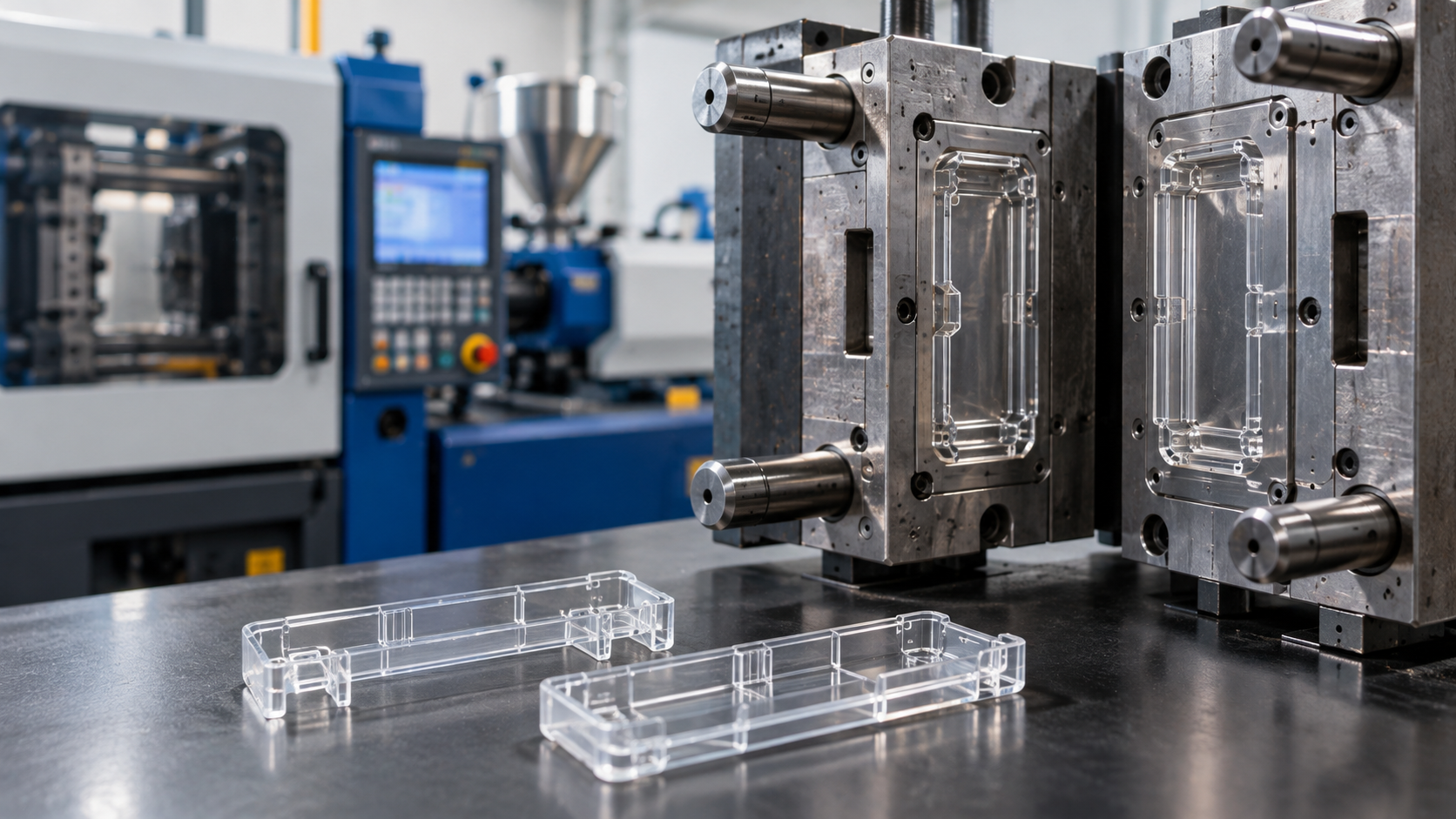
Every gram and every second matters in high-volume plastic production, and thin-wall molding is where both get squeezed hardest. Reduce wall thickness and you use less material per part, cool the part faster, and shorten cycle time — three levers that move unit cost directly. The catch is that thinner walls make the mold harder to fill, easier to warp, and less forgiving of design and processing errors. Thin-wall molding is a genuine engineering trade-off, not a free saving, and treating it as free is how programs get into trouble.
This article explains what thin-wall molding involves, where it pays off, and the design and tooling realities that decide whether a thin-wall part succeeds or becomes a chronic quality problem.
What “thin-wall” actually means
There is no universal thickness that defines thin-wall molding, and any single number quoted as the threshold should be treated with suspicion. What counts as thin depends on the material, how far the plastic has to flow, the part geometry, the machine's capability, the mold design, and the processing window. A wall that is routine for a small part in an easy-flowing material can be genuinely thin-wall for a large part in a stiffer resin. The practical definition is functional: a wall is thin-wall when reaching it pushes filling, cooling, or dimensional control toward the edge of what the material and tool can reliably do.
The more useful concept is the flow-length-to-wall-thickness ratio — how far the melt must travel relative to how thin the channel is. As that ratio climbs, filling gets harder, and material selection, gating, and injection dynamics matter more.
Why manufacturers go thin
The motivations are consistent across industries: less material per part lowers cost and weight, and thinner walls cool faster, which shortens cycle time and raises output from the same machine. In packaging and high-volume consumer parts, those savings compound across enormous quantities. Weight reduction is also valuable wherever a lighter part improves the end product. When the numbers work, thin walls are one of the strongest cost levers in molding.
The filling problem
Thin walls resist flow. As the melt races through a narrow channel, it cools against the mold surface, and if it freezes before the cavity fills, the part short-shots. This is why thin-wall molding leans on higher injection speeds and pressures, and on materials with the flow characteristics to reach the far corners before solidifying. The mold has to deliver melt efficiently, which raises the importance of gate design and gate location — often more, and better-placed, gates than a thicker part would need.
Cooling, shrinkage, and warpage
Faster cooling is the reward and the risk. Thin sections cool quickly, but uneven cooling across the part produces uneven shrinkage, and uneven shrinkage produces warpage. In a thin-wall part there is little material stiffness to resist that distortion, so the part is more prone to bowing and twisting. Balanced cooling in the tool, uniform wall design, and careful gate placement are what keep a thin-wall part flat. Shrinkage behavior also depends on material — semi-crystalline resins shrink more and less predictably than amorphous ones — which feeds back into both material choice and how the tool is cut.
Venting and pressure
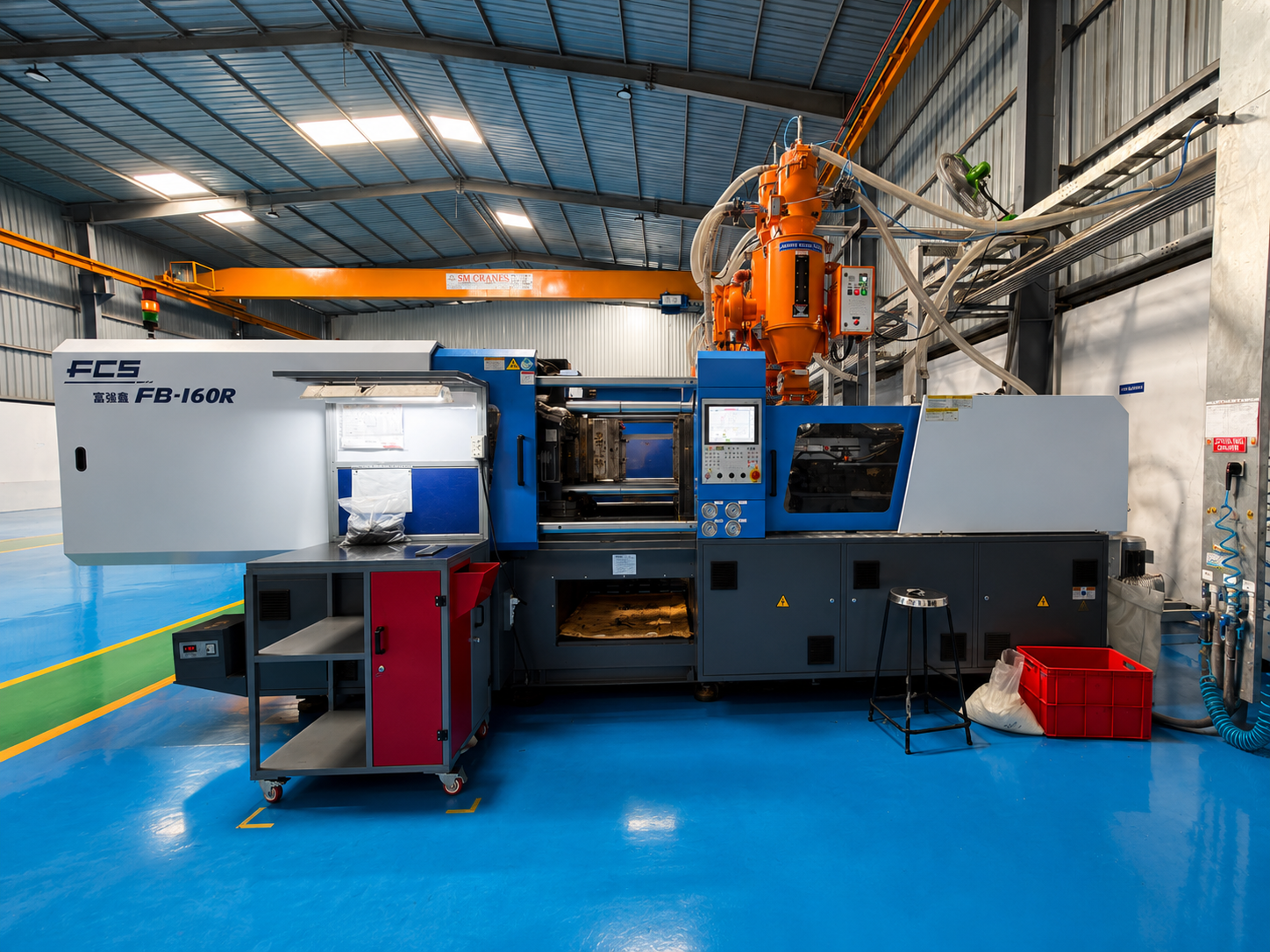
Pushing melt fast into a thin cavity displaces air quickly, and that air has to escape. Inadequate venting shows up as burn marks, short shots, or poor surface finish. Thin-wall tools generally need deliberate venting to match the higher fill speeds. The higher injection pressures involved also demand a robust mold and machine capability sized to the job — thin-wall work often needs machines with the injection speed and clamp performance to support it.
Geometry: ribs, bosses, and tolerances
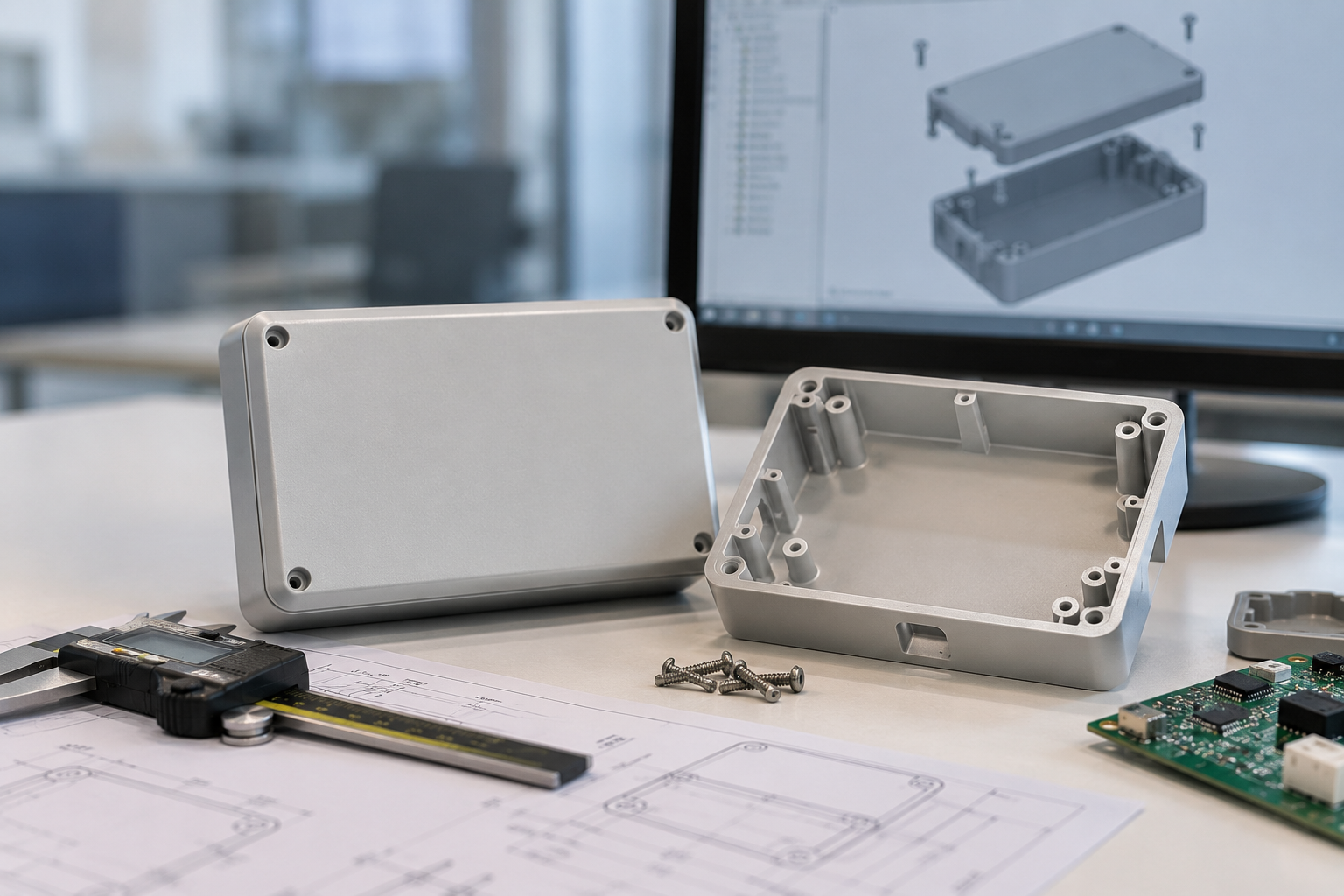
Thin-wall design still needs stiffness, and ribs remain the tool for adding it without thickening the wall — but rib proportions get more delicate as walls thin, because a rib too thick at its base will sink or distort a wall that has little material to spare. Bosses and other thick features stand out more against a thin nominal wall and need careful coring. Tolerances tend to tighten in difficulty as walls thin, because the same warpage and shrinkage that thin walls invite are the enemies of dimensional consistency. Realistic tolerances come from matching the geometry, material, and process rather than from optimistic drawings.
When thin-wall makes sense — and when it doesn't
Thin-wall molding earns its complexity when volume is high enough that material and cycle-time savings outweigh the added tooling and processing demands, and when the material and geometry can actually support the thin section. It makes less sense when volumes are modest, when the part geometry has long flow paths that a thin wall can't reliably fill, when tight flatness or tolerance requirements clash with the warpage risk, or when the chosen material simply lacks the flow to do it. Pushing a wall thinner than the application needs can add manufacturing risk for a saving that never justified it.
The honest answer, on most parts, comes from analysis rather than assumption — evaluating flow, cooling, and warpage for the specific geometry and material before committing the tool.
FD Group perspective
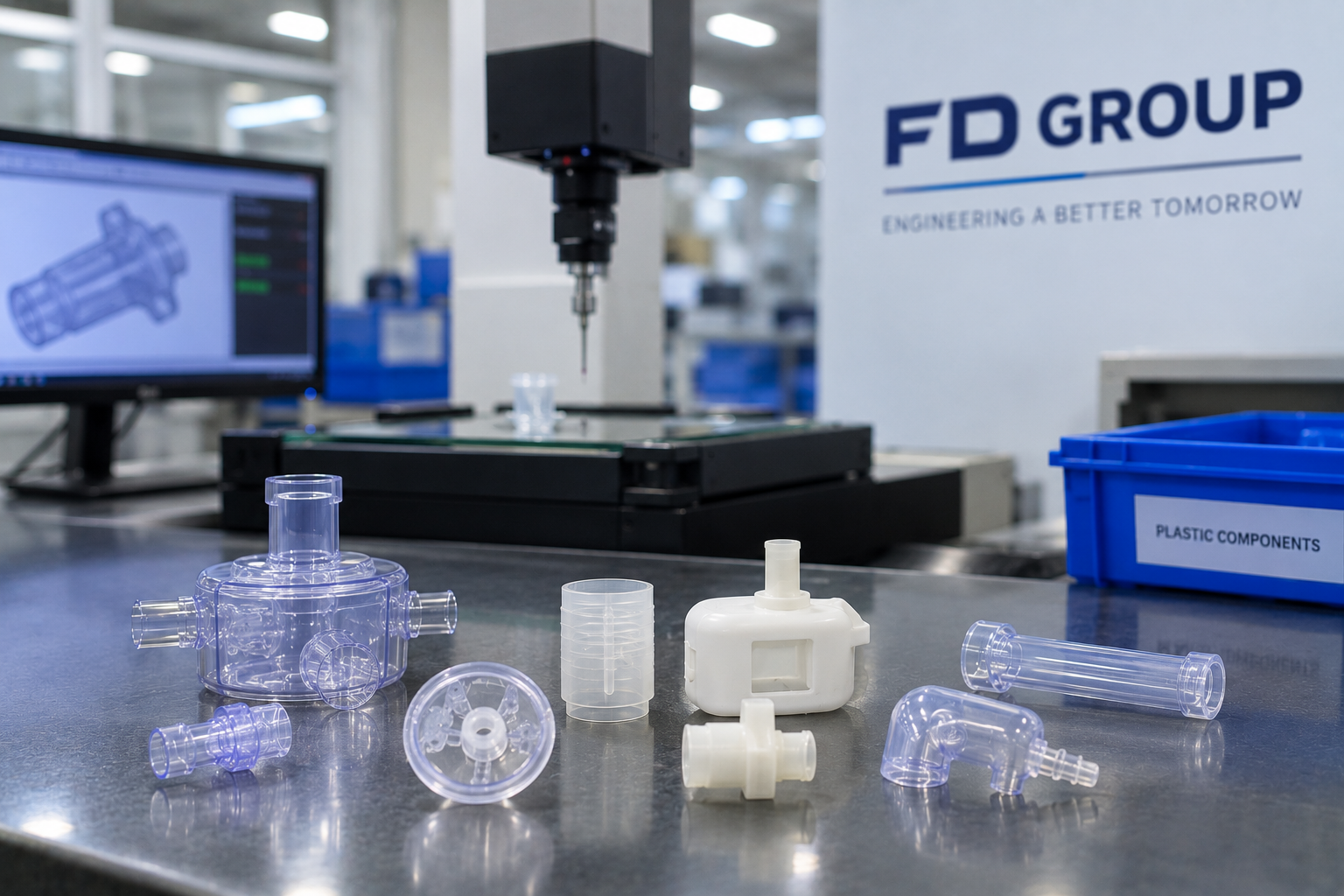
FD Group evaluates thin-wall feasibility as an engineering question, not a default: reviewing flow length, material behavior, gating, and cooling against the part's requirements, supported by mold flow analysis where it clarifies the risk. With in-house tooling and process control including SPC monitoring, the decision to go thin is made where it genuinely lowers cost — and avoided where it would only add risk.
Considering thin-wall molding for a high-volume part? Ask FD Group to assess feasibility for your material and geometry before committing to tooling — get in touch at www.fdgroup.co.in.