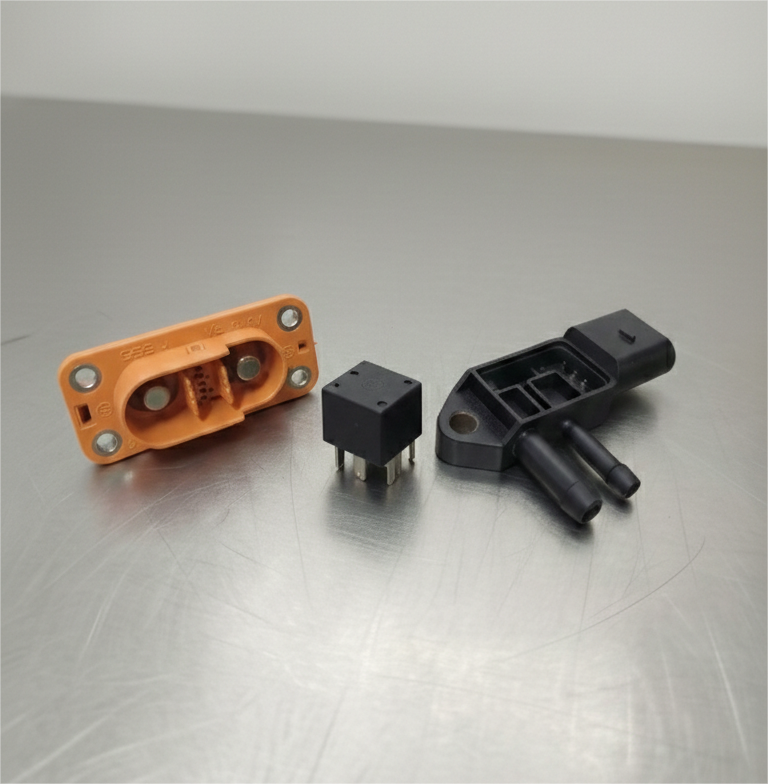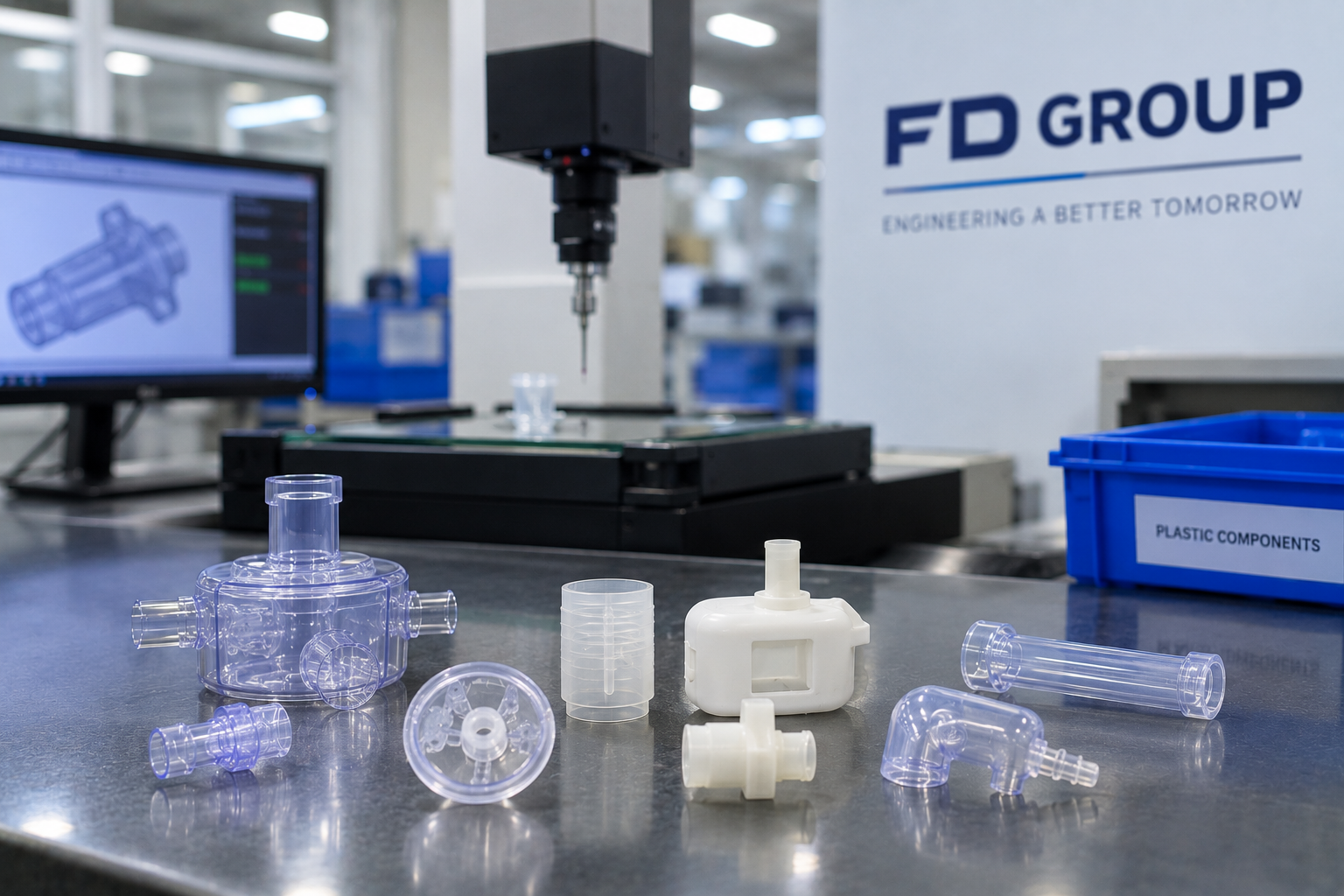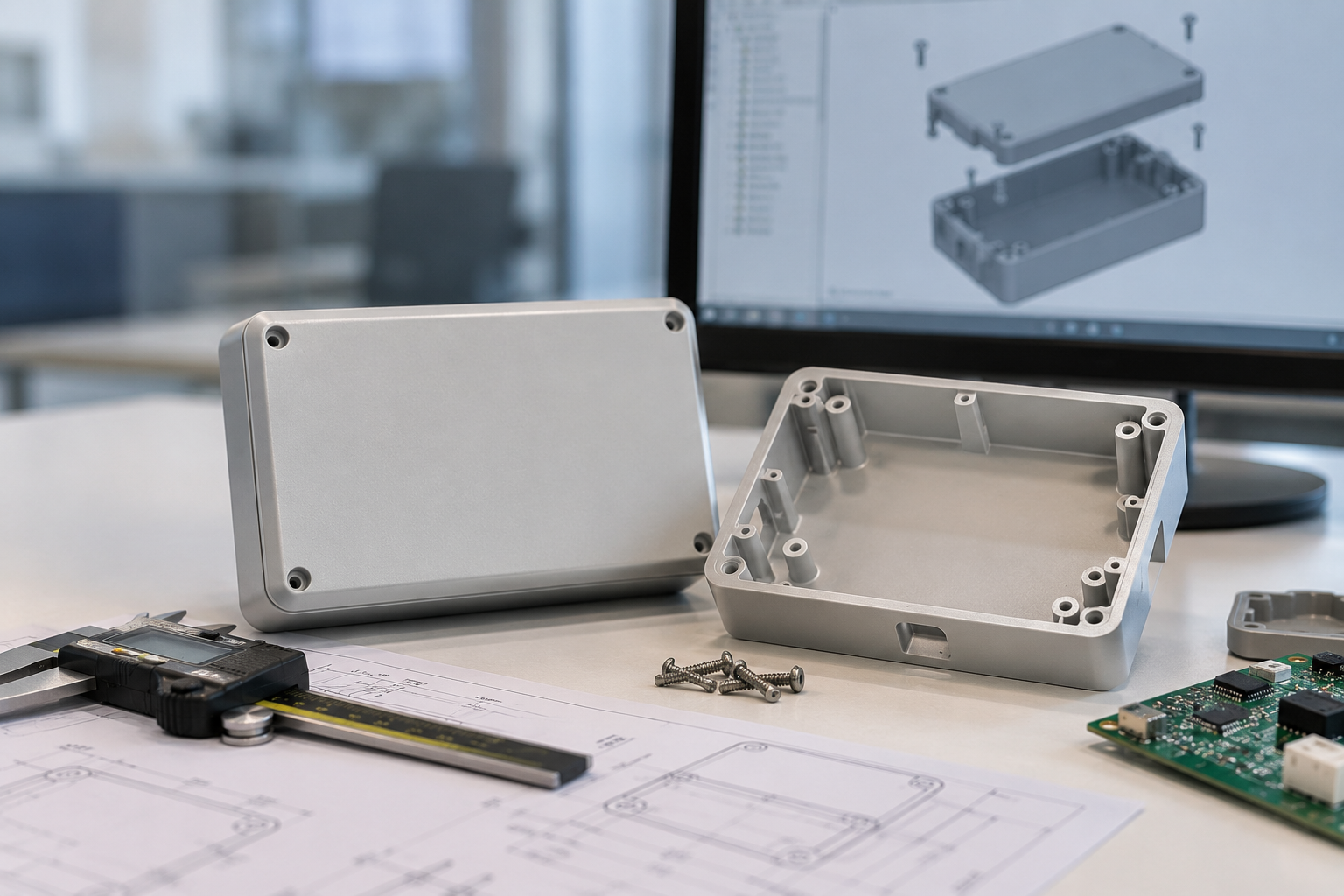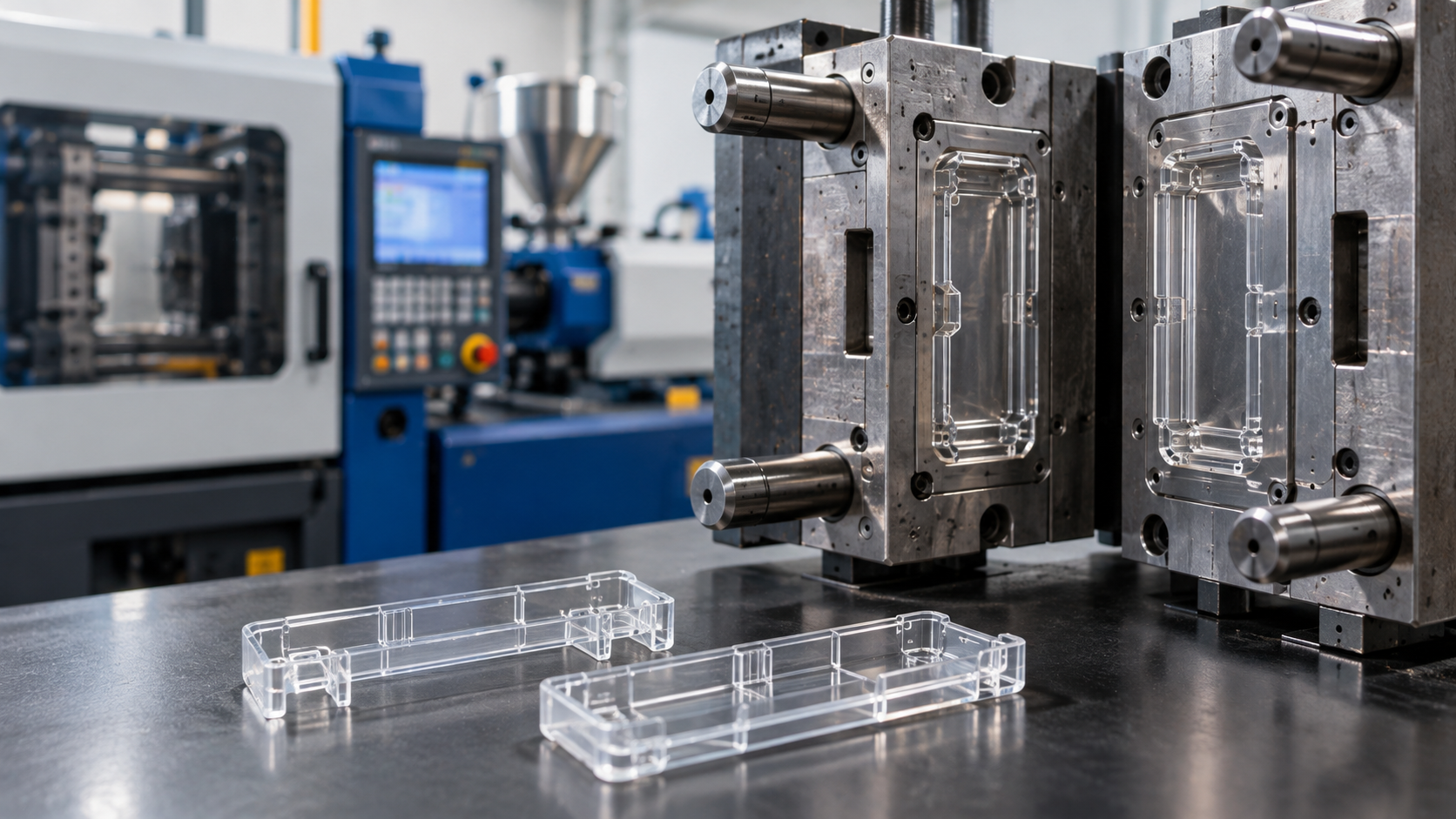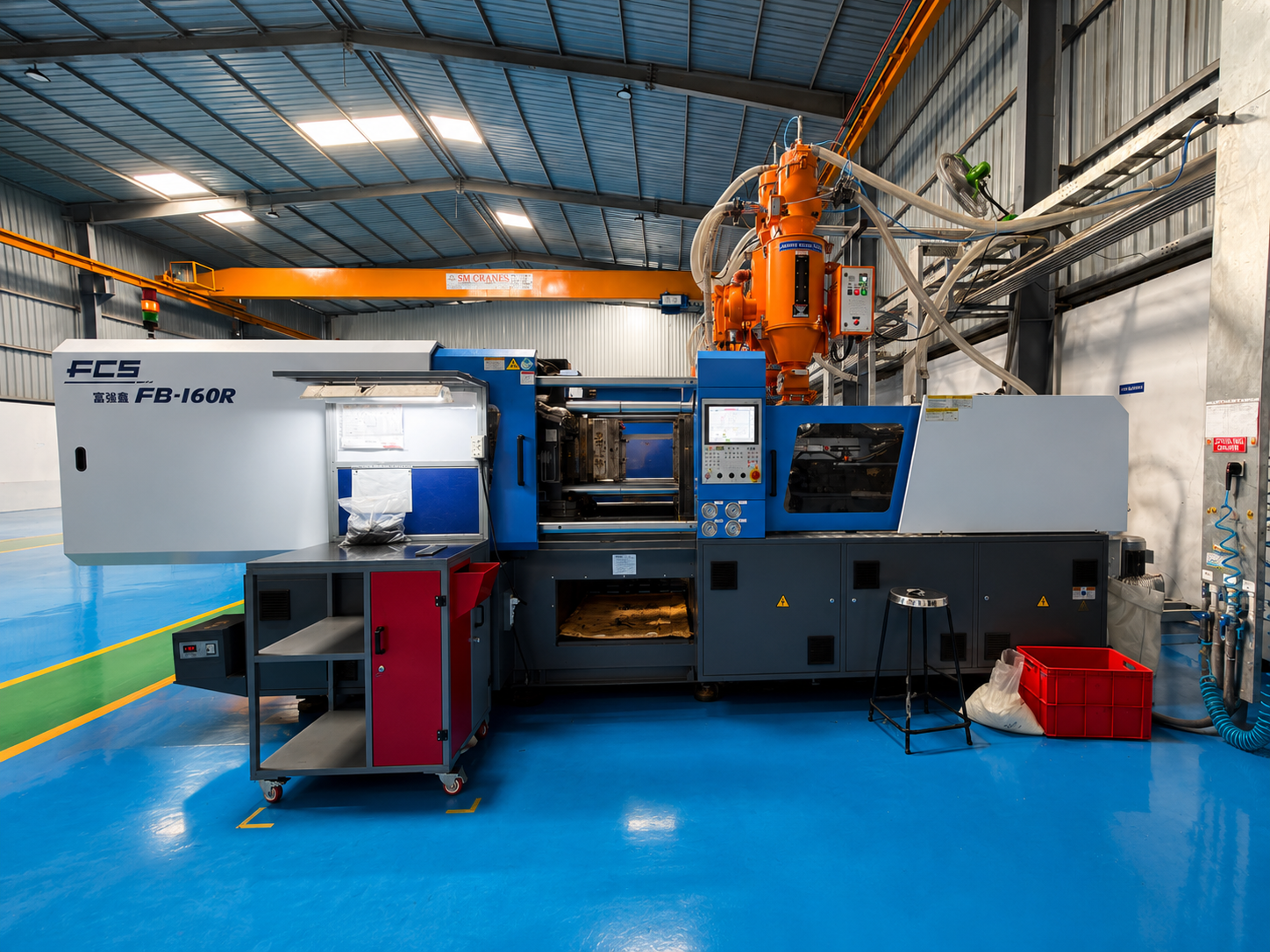
A single passenger vehicle can carry several hundred injection molded plastic components — clips, brackets, connectors, housings, trim, and functional assemblies that most drivers never notice. What makes automotive work demanding is not the complexity of any one part, but the combination of requirements stacked onto it: the part has to fit within microns of its neighbors, survive under-hood heat or interior UV exposure, hold up to vibration for years, and do all of that across hundreds of thousands of identical units without drifting out of specification.
That combination is why automotive plastic component manufacturing rewards suppliers who think about production early, at the design and tooling stage, rather than treating molding as a downstream step. The decisions that determine whether a part performs — and whether it stays profitable at volume — are usually locked in long before the first shot is molded. This article walks through the considerations that matter most when moving an automotive plastic part from drawing to production.
Why molding dominates automotive plastics
Injection molding suits automotive production for a straightforward reason: once a validated tool exists, it produces consistent parts at a low cost per unit and at rates that match assembly-line demand. Metal-to-plastic conversion has expanded steadily because engineered polymers can hit strength and heat targets while cutting weight, part count, and secondary operations. A molded bracket with integrated snap features can replace a stamped part plus fasteners, which removes assembly labor and tolerance stack-up at the same time.
Typical component families
Automotive molded parts tend to fall into a few groups, each with its own priorities:
- Interior components — trim panels, bezels, switch surrounds, and cosmetic covers where surface finish and color consistency matter as much as fit.
- Structural and functional parts — brackets, mounts, housings, and clips that carry load or locate other components.
- Under-hood parts — connectors, covers, and fluid-adjacent components that face heat, oils, and chemical exposure.
- Fasteners and retainers — clips and trim retainers produced in high volume where cycle time and repeatability drive cost.
The engineering emphasis shifts depending on which group a part belongs to. A visible bezel lives or dies on cosmetics; an under-hood connector lives or dies on material performance.
Material selection is a performance decision, not a cost line
The polymer choice affects far more than resin price. An automotive material may need to hold dimensional stability through heat cycling, resist fuels or cleaning chemicals, absorb vibration without cracking, and retain properties after years of service. Common families include ABS and PC/ABS for interior and cosmetic parts, polypropylene for chemical resistance and living hinges, and glass-filled nylon (PA6,6) where mechanical strength and heat resistance are needed. Flame-retardant grades come into play for parts near electrical systems.
Glass or mineral fillers change the equation further. They raise stiffness and heat deflection temperature, but they also increase abrasiveness on the tool and can introduce anisotropic shrinkage, where the part shrinks differently along and across the flow direction. That behavior has to be anticipated in the mold, not discovered after the first samples warp.
Tolerances, shrinkage, and repeatability
Automotive assemblies depend on parts that mate predictably. Achievable tolerance depends on the material, part geometry, gate location, and how tightly the process is controlled. Semi-crystalline materials like nylon and polypropylene shrink more than amorphous materials like ABS, and filled grades shrink differently again. A capable toolmaker accounts for expected shrinkage when cutting steel and validates it against actual molded samples before the tool is released for production.
Repeatability is where process control earns its place. Statistical process control (SPC) monitoring and process capability (Cpk) tracking on critical dimensions give both supplier and customer evidence that the process stays centered over long runs — not just that the first-off part measured well.
Tooling built for volume
Automotive tools are expected to run reliably for large quantities, which raises the bar on steel selection, cooling layout, and gating. Balanced runner and cooling design keeps multi-cavity tools filling and cooling evenly, so parts from every cavity fall within the same window. Hot runner systems reduce material waste and improve fill consistency on larger or higher-volume parts. Gate location deserves early attention because it influences weld line position, cosmetic appearance, warpage, and where stress concentrates.
FD Group manufactures tooling in-house using VMC, EDM, and CNC wire machining, which keeps control of tool quality and timelines within one team rather than depending on outside toolrooms.
Traceability and quality documentation
Automotive customers increasingly expect documentation that follows a part from raw material to finished component. Material traceability, dimensional records from CMM inspection, and lot-level documentation make it possible to investigate any field issue back to its source. FD Group operates an ISO 9001:2015 quality system with CMM dimensional inspection and traceability from raw material to finished component, and is in the process of pursuing IATF certification — a distinction worth stating plainly rather than overstating.
Common design mistakes
A few recurring issues cause the most trouble in automotive molded parts:
- Uneven wall thickness, which drives sink marks, warpage, and inconsistent shrinkage.
- Insufficient draft, which makes ejection difficult and marks cosmetic surfaces.
- Sharp internal corners, which concentrate stress and disrupt flow.
- Gate placement chosen for tool convenience rather than part performance, leaving weld lines or cosmetic defects in visible areas.
Most of these are inexpensive to fix at the drawing stage and expensive to fix once steel is cut. A design-for-manufacturing (DFM) review before tooling begins is the cheapest quality investment available.
Selecting a molding partner
For automotive work, the useful questions go beyond price. Can the supplier review your design for manufacturability before committing to steel? Do they build and maintain tooling with volume in mind? Can they show dimensional and process data, and trace material through the process? Do they understand how material and gate decisions ripple into warpage and assembly fit? A partner who engages at the design stage tends to cost less over the life of the program than one selected on tooling quote alone.
FD Group perspective
At FD Group, automotive-style parts are approached from the manufacturability side first. Drawings are reviewed for DFM and mold flow before cutting steel, tooling is produced in-house, and molded parts are checked with CMM inspection and Cpk tracking on critical dimensions. That combination — engineering review, in-house tooling, and documented quality — is what makes plastic components repeatable across long production runs.
Planning an automotive plastic component? Share your drawings with FD Group's engineers for a manufacturability review before you commit to tooling — request a quote at www.fdgroup.co.in.