Both insert molding and overmolding combine a molded plastic with something else — a metal component, a second polymer, a pre-made part — to produce a finished piece that would otherwise take separate parts and an assembly step. Because they sound similar and often get mentioned together, they also get confused, and choosing the wrong one leads to bonding failures, awkward tooling, or cost that never had to be there. The distinction is worth getting right, because it changes how the part is designed, tooled, and produced.
The short version: insert molding places a pre-existing component into the mold and forms plastic around it; overmolding forms one material over another molded material, usually for grip, sealing, or a soft-touch surface. The rest of this article works through how each behaves and how to decide between them.
Insert molding
How it works
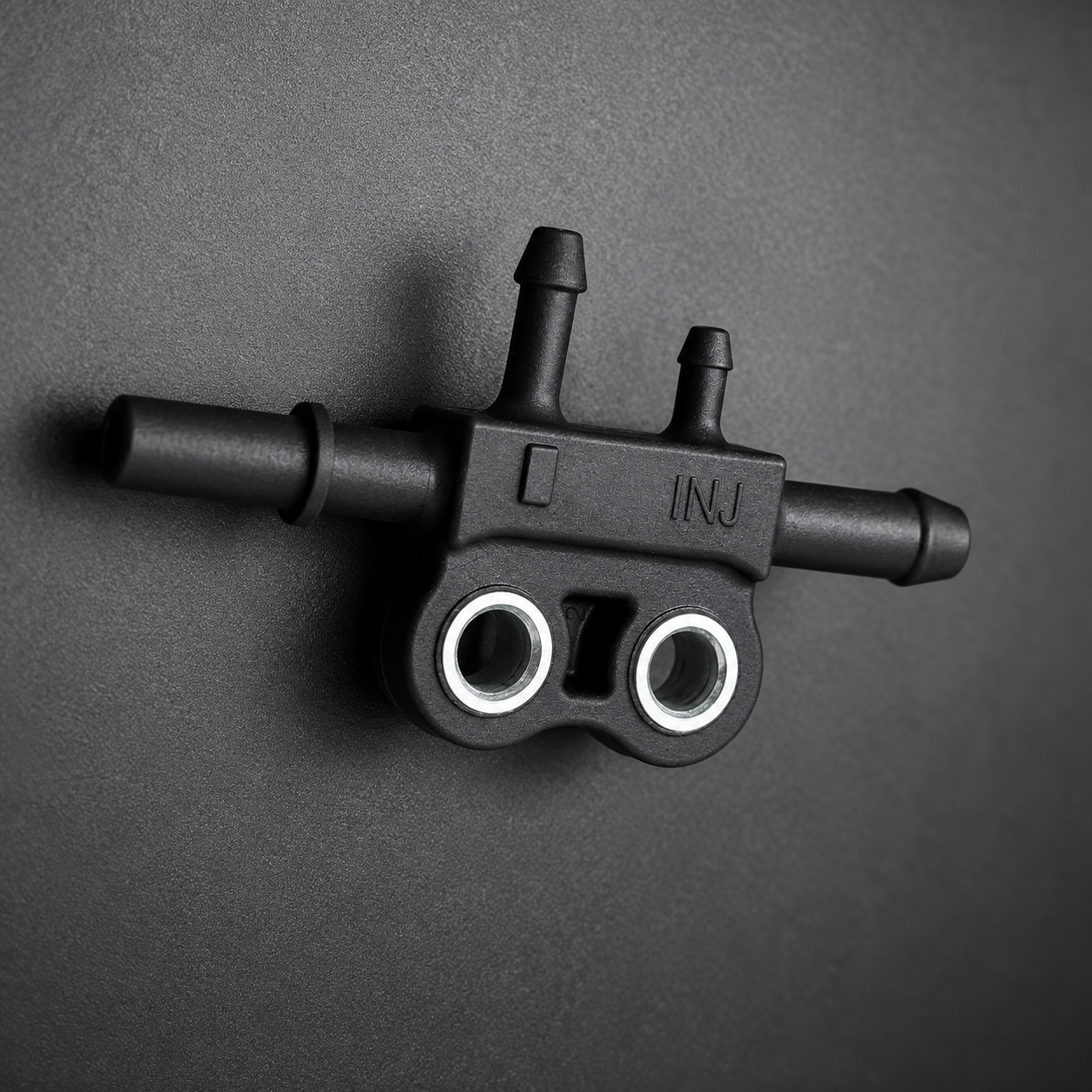
In insert molding, a prepared insert — most often a metal component such as a threaded bushing, pin, terminal, or stud — is loaded into the mold cavity before injection. Plastic is then molded around it, capturing the insert in the finished part. The plastic typically retains the insert mechanically, gripping features on the insert as it shrinks around them.
Typical applications
Insert molding is common wherever plastic parts need durable metal features: threaded inserts for repeated fastening, electrical terminals and contacts, load-bearing pins, and metal reinforcements in an otherwise plastic body. It replaces the alternative of molding the plastic first and then pressing or heat-staking metal in afterward.
Advantages
- Combines metal function (threads, conductivity, strength) with plastic form in one part.
- Removes a secondary assembly operation and the tolerance stack-up that comes with it.
- Produces a robust, repeatable joint when the insert and retention features are designed well.
Limitations
- Loading inserts adds a step to the molding cycle and, unless automated, manual handling.
- Insert placement and dimensional control matter — a shifted insert produces a defective part.
- Retention depends on good mechanical design; a poorly featured insert can pull out or spin.
Overmolding
How it works
Overmolding forms a second material over a first. The substrate is molded first (or supplied as a pre-molded part), then a second material is molded over selected areas. It is frequently used to add a soft elastomer grip over a rigid structural base. When both materials are molded in sequence in a single, purpose-built process — often called two-shot, two-component, or 2K molding — the part moves between stations within one cycle rather than being handled between separate operations.
Typical applications
Soft-touch grips on tools and devices, sealing surfaces and gaskets molded onto rigid frames, multi-color parts, and ergonomic surfaces are all classic overmolding jobs. Anywhere a part benefits from combining a hard structural material with a soft or differently colored one, overmolding is the usual route.
Advantages
- Combines two materials' properties — rigid plus soft-grip, or structural plus sealing — in one integrated part.
- Improves ergonomics, sealing, or appearance without a separate assembly.
- With 2K/two-shot processing, delivers strong, consistent results at volume with reduced handling.
Limitations
- Success depends heavily on material compatibility and bonding between the two materials.
- Two-shot tooling is more complex and more expensive to build than a single-material tool.
- Material pairs that don't bond chemically need mechanical interlock features designed in.
The comparison that matters
The decision usually turns on what the “other” element is and how the two parts need to join.
| Factor | Insert Molding | Overmolding |
|---|---|---|
| Second element | Pre-made insert, often metal | A second molded material (often polymer) |
| Primary purpose | Add metal function (threads, contacts, strength) | Add grip, seal, color, or soft-touch |
| Bonding | Mechanical retention around the insert | Chemical bond and/or mechanical interlock |
| Tooling complexity | Moderate; needs insert location and support | Higher, especially for 2K/two-shot tools |
| Assembly reduction | Removes a metal-fitting step | Removes a second-material assembly step |
| Main risk | Insert shift or poor retention | Poor material compatibility / weak bond |
Material compatibility is the pivotal question for overmolding: if the two polymers don't bond, the design has to provide mechanical interlock, or the part will delaminate. For insert molding, the pivotal question is retention and placement: whether the insert is featured to grip and located precisely enough to mold consistently.
When to choose which
Reach for insert molding when a plastic part needs the function of a metal element — a reliable thread, an electrical contact, a strong pin — integrated into it, and you want to avoid pressing or staking that element in afterward.
Reach for overmolding when a part benefits from a second material's properties — a soft grip, a seal, a different color — bonded to a rigid base, and the two materials can be made to join reliably.
Sometimes neither is the right answer. If volumes are low and tooling investment is hard to justify, if the two materials can't be made compatible, or if a simple separate part plus a fastener or a standard seal does the job more cheaply, conventional assembly may win. Multi-material molding is powerful, but it earns its place through volume, integration value, or performance — not by default.
FD Group perspective
Multi-material and insert work sit within FD Group's capabilities: insert molding, over-molding, and 2K (two-component) molding are all part of the process range, supported by in-house tooling and controlled assembly. Because the same team handles mold design, molding, and assembly, the material-compatibility and retention questions that decide whether these parts succeed can be worked out at the design stage — where they are cheapest to solve — rather than discovered in production.
Weighing insert molding against overmolding for your part? Talk to FD Group's engineers about material compatibility, retention, and tooling before you decide — discuss your project at www.fdgroup.co.in.